Letters That Still Wet: The Hands Painting Britain’s Cinema Fronts
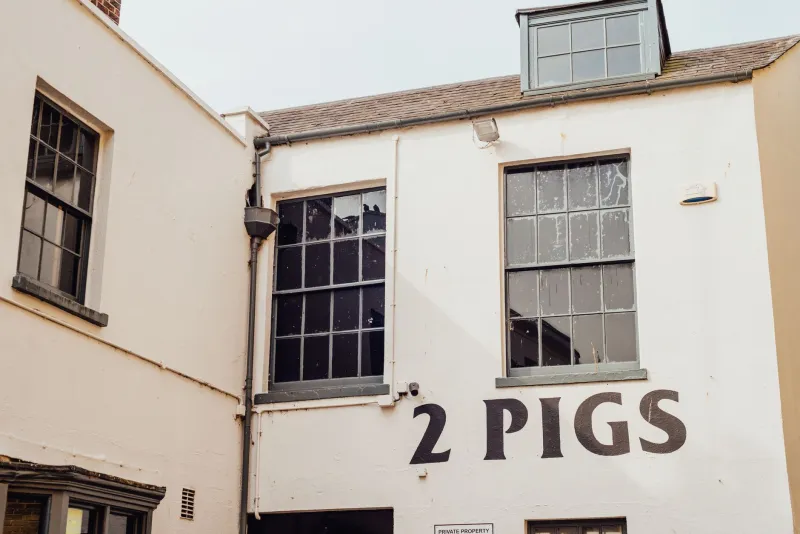
On a damp Tuesday in Leeds, a cinema front can look like a promise that has been rained on. The letters are slightly uneven. The red has gone a little pink at the edges. A previous programme peeks through where the paint has thinned. And somehow the whole thing feels more like a night at the pictures than a backlit vinyl banner ever will.
That is the strange power of the hand-painted cinema frontage. It is advertising, architecture and atmosphere in one surface. It tells you what is showing, but it also tells you what kind of place you are about to enter: a room with history, a building that has been repainted, patched and argued over. In 2026, when a decent vinyl print can be ordered before lunch, the fact that anyone still stands on a pavement with a mahl stick is worth noticing.
A different kind of special effect
Signwriting is not nostalgia for its own sake. It is a craft with a practical grammar. A good cinema signwriter has to think like a graphic designer, a painter and a projectionist at once. The title has to read from across the road. The times have to behave. The colours have to suggest the film without turning the facade into a fairground.
A horror double bill wants letters with a little menace — sharper terminals, deeper shadows, maybe a bruised purple behind the title. A warm British comedy might get softer curves and a cream that looks like afternoon light. A foreign-language drama needs clarity and confidence; too much decoration and the title becomes a puzzle. The signwriter is translating mood into letterforms, and doing it with a brush that cannot be undone with Ctrl+Z.
That translation is physical. Enamel and oil behave differently. A cold morning changes how the paint flows. A west-facing frontage will fade faster than a sheltered one. The signwriter has to know what the building will do to the work over the next five years, not just how it looks by Friday.
The frontage as a layer cake
For a photographer, these facades are a gift. They are palimpsests — surfaces written over again. Under the current title there may be the ghost of last month’s release, and under that a repaint from the 1980s, and under that a colour scheme nobody alive remembers choosing. Close up, the paint has ridges and brush marks. From across the street, it resolves into a single confident image.
This is why a photograph of a fading cinema front can say more than a clean architectural shot. The wear is the story. A crack in the lettering, a patch where the rain runs, a bracket that no longer holds anything — these are clues to a building’s hidden life. You can read the decades in the way the paint has aged. You can also read the present: the new coffee hatch, the repaired canopy, the hand-lettered notice taped beside the door because the main sign was painted for a film that has already moved on.
At Icarus Studios, we tend to chase the spaces between the big set pieces. The cinema frontage is exactly that kind of space. It is not the screen and it is not the street. It is the threshold where the everyday city turns into a night out.
Why independents are coming back to the brush
A small but real revival is underway. Independent cinemas are not suddenly rejecting vinyl — it is too useful, too cheap and too quick for the weekly churn. But some venues are commissioning hand-painted work for the parts that matter: the main title board, the canopy, a seasonal facade, a one-off event. The reasons are practical as well as romantic.
First, a painted frontage photographs beautifully, and in 2026 a cinema’s front is part of its social life. People meet under it. They take pictures beneath it. A painted sign gives them something with texture, something that does not look like every other poster in the feed. Second, a good signwriter can work with an awkward old building in a way that a standard-sized vinyl panel cannot. They can fill a strange space, match a heritage colour, or letter around a canopy bracket that has been there since the 1930s.
Third, there is the matter of repair. Vinyl fails in sheets. Paint fails in patches. A signwriter can come back, match the colour and touch in a letter without replacing the whole frontage. For cash-strapped independents, that maintenance model can be quietly attractive.
The towns where it still happens
You will not find hand-painted cinema fronts on every high street. You will find them in places where the building has kept its bones: the old picture houses in Leeds and Glasgow, the stubborn locals in Bristol and Sheffield, the seaside cinemas that have been repainted so often the facade has a history in cross-section. Sometimes the work is new. Sometimes it is a careful restoration. Sometimes it is simply the last coat that nobody has bothered to cover up.
The signwriters themselves tend to be modest about it. They talk about preparation, primer, lettering guides and the weather. They do not call themselves artists, even when the result is more expressive than half the posters in the foyer. But that is part of the appeal. The craft is embedded in the town. It is not dropped in from a studio; it is mixed, matched and painted on site, with the buses going past and the rain threatening.
What the brush leaves behind
A hand-painted frontage will never win on speed. It will never be as crisp as a digital print, and it will never be as easy to change. But it leaves something behind that vinyl does not: evidence of a human hand making a decision. A slightly heavier serif. A colour chosen for the building rather than the brand guidelines. A line of lettering that looks right from the pavement, even if it is not technically perfect.
In a year when so much of cinema’s visual language arrives as a file, that feels worth protecting. The next time you pass an old picture house, look up at the lettering. If the edges are a little soft and the colour has a story, you are looking at a craft that is still wet — just about.