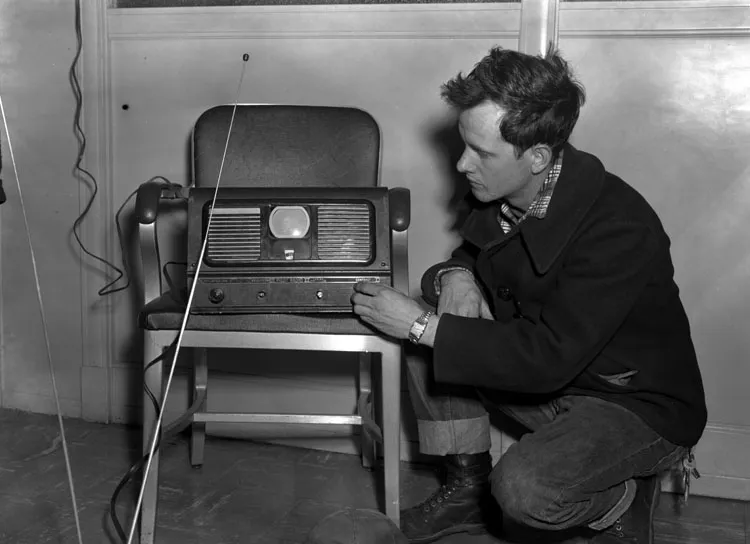
The Bench Never Lies: Inside the UK Workshops Giving Old Cameras a Second Act
Photo: sv1ambo, CC BY 2.0, via Wikimedia Commons
On a wet Tuesday in Bristol, the smell arrives before the sound. Lighter fluid, old leatherette, a faint metallic tang of brass filings. Then the click: a shutter being cocked, released, cocked again. The workshop sits above a high street that is doing its best with fairy lights and a busker, but up here the world has narrowed to a bench, a lamp and a tray of very small screws.
This is not a museum. Nobody is polishing a display case. The cameras on the bench are users: a Pentax Spotmatic that came out of a Manchester loft, a Canon AE-1 from a car boot in Norfolk, a rangefinder inherited from a grandad who bought it in Singapore in the 1970s. Some will be repaired. Some will become donors. A few will be handed back with a gentle verdict and a clean conscience.
Across the UK, this quiet trade is having a moment. The 2026 film-photography boom is not just about lab queues and sold-out rolls of Portra. It is about what happens when a new generation inherits a camera that has not been serviced since the Thatcher era, or buys one on eBay because the pictures looked nice and the description said ‘untested’. Repairers are the unsung infrastructure of that boom.
The Backlog Is the Story
Ask anyone who fixes cameras for a living and they will tell you the same thing: the queue is the story. Not the celebrity camera, not the rare lens, but the ordinary backlog. A repair is a conversation between budget, sentiment and parts. Technicians triage. They open the back, check the shutter, shine a torch through the lens, ask what the camera means to you. That last question matters more than it should.
‘People arrive with a camera and a story,’ one technician tells me, wiping a dab of grease from a finger. ‘Sometimes the story is worth more than the repair. Sometimes it is the repair.’
The work itself is part surgery, part archaeology. Old lubricants turn to glue. Foam light seals crumble into black dust. Mirror bumpers go sticky. Rangefinder patches fade. Meter circuits drift. None of this is glamorous, and that is precisely why it is interesting. A camera is a small mechanical world, and a repairer is the person who knows where the springs live.
What Actually Breaks
The most common failure is neglect, not use. A camera that has sat in a drawer for twenty years is not necessarily in better condition than one that has been carried through a dozen festivals. It is often worse. The grease has set. The seals have perished. The battery has leaked. The shutter has forgotten how to move.
Practical advice, then, for anyone with an old camera and a hopeful expression. Do not force a film advance lever. Do not squirt WD-40 into anything. Do not open the back in daylight with a roll inside. Do not assume a squeaky wind-on is a quirk; it is often a warning. If you are buying untested, factor in a service quote before you fall in love with the finish. And test with a cheap roll before you book a wedding.
At the bench, the diagnosis is usually swift. Sticky shutter: clean and lubricate. Fungus: isolate, clean, assess whether the coating has been etched. Haze: often more serious than dust, because it scatters light and softens contrast. Light seals: cheap to replace, easy to ignore, responsible for more mysterious light leaks than any other single failure. A meter that reads a stop out is not a disaster; a meter that reads nothing may be a circuit board you cannot source.
Save It, Scrap It, or Keep It as a Paperweight
There is no single rule, but there are patterns. Save the mechanical SLRs and rangefinders with common mounts, simple leaf shutters and lenses whose glass is clean and whose focus ring turns without grit. Save the cameras that were built to be serviced. Save the ones with family history, if the owner understands the cost.
Scrap, or use as a donor, the bodies with heavy corrosion, cracked prisms, snapped mirror boxes or dead unobtainable electronics. Fungus etched into lens coatings is usually a lost cause. So is a camera that has been stored in a damp shed for a decade and smells of the shed. A good repairer will tell you the honest truth: the repair may cost more than the camera is worth. But worth and value are not the same thing.
Hands, Dust and the Portrait of a Workbench
For photographers documenting this world, the temptation is to tidy. Resist it. The story is in the brassed edges, the oil-stained finger cuffs, the labelled trays of screws, the lens tissue folded into a triangle. Use window light if you can. Let the lamp do the rest. A macro lens is useful, but a 50mm can be better because it shows the relationship between the hands and the tool.
Ask before you move anything. A repair bench is a map of someone’s attention. The position of a screwdriver is not random. And photograph the hands: not just the clean final shot, but the pause, the squint, the moment a technician holds a shutter up to the light and listens.
What Old Cameras Teach New Image-Makers
Old cameras are full of useful friction. A click-stopped aperture ring. A shutter speed dial you have to think about. A focus screen that does not confirm anything. A frame counter that advances one exposure at a time. This is not nostalgia; it is a set of constraints that can sharpen the way you see.
A camera that makes you wait can teach composition. A lens with a slightly stiff focus ring can teach patience. A meter that is a guide rather than a god can teach judgement. And the repair bench itself is a design lesson: screws instead of glue, springs instead of firmware, serviceable parts instead of sealed units. In an age of disappearing ports and glued-shut bodies, a fifty-year-old camera that can be opened, cleaned and returned to service looks less like an antique and more like a quiet act of defiance.
In 2026, the second act is being written one screw at a time. The bench never lies: it shows you what is worn, what is broken and what is worth saving. Small screws, big light. And somewhere above a high street, a shutter learns to breathe again.