Grey Is a Colour: Making British Rain Your Best Collaborator
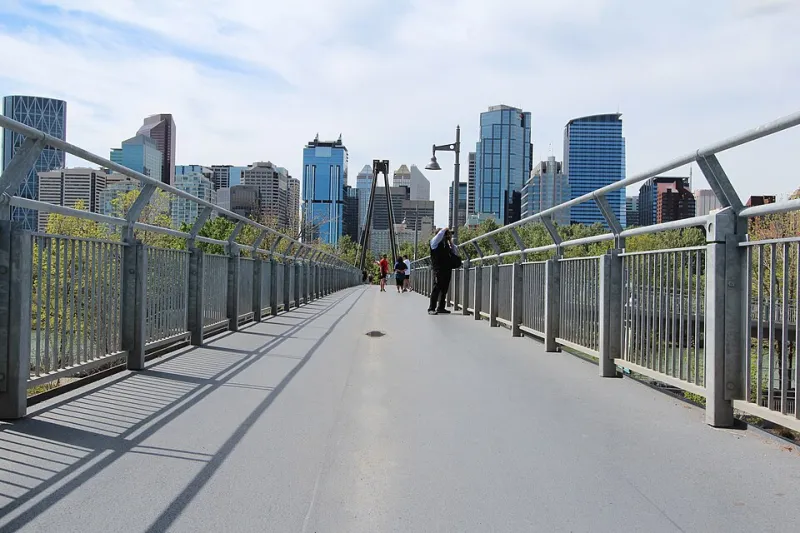
Photo: Thank you for visiting my page from Canada, CC BY 2.0, via Wikimedia Commons
There is a particular sound a British shoot makes when the forecast quietly gives up on you. Water finding the gap between hood and collar. The rip of a bin liner being sacrificed to save a lens. The collective sigh of three people who have driven two hours to a lay-by outside Buxton for a view that is, at present, the colour of a dishcloth.
I have stood in all of it. I have also come home with the frames I still show people — the ones made in the ten minutes after the sky went flat and everything in the landscape stopped performing and started being honest.
The weather isn't bad, it's doing something else
Calling it bad is a habit we inherited from holiday brochures. Overcast light is a softbox the size of a county. It wraps, it forgives, it refuses to blow out a white cottage wall or a horse's shoulder. Rain does something rarer still: it adds a second surface to the world. Tarmac turns into a mirror. Slate goes black and glassy. Moss and lichen and painted doors all jump forward a stop and a half in saturation. Mist removes the middle distance, which is nearly always the ugliest part of a British view, and leaves you foreground and suggestion.
Photographers travel thousands of miles for conditions we get free on a Tuesday in November. The trick is to stop shooting the day you wanted and start shooting the day you have.
Read the sky before you commit
British weather rewards the half-hour you spend looking rather than the four hours you spend driving. Watch the cloud base on the western horizon: if it is stacked and moving fast, you have gaps coming and the light will flicker like a strobing gel. If it is one flat duvet from horizon to horizon, stop looking for sunbeams and start looking for texture — wet stone, dripping gutters, water threading through a drystone wall.
Rain radar on your phone is now good enough to read in ten-minute slices. Use it not to cancel, but to position yourself. A band of rain clearing at four o'clock means the twenty minutes either side of it are the best light of the week: dark, saturated, faintly electric.
Wind direction matters more than most people think. Shoot with the rain on your back and the front element stays almost dry; shoot into it and you get visible droplets, which can be lovely for one frame and a nightmare for fifty.
Kit that doesn't flinch
You do not need a waterproof camera. You need a system of small, cheap sacrifices.
- A sacrificial filter. A clear or UV filter on the front of every lens costs nothing to replace and takes the salt, the grit and the scratches. Swap it out when it gets smeared beyond rescue.
- Rain sleeves, not promises. Purpose-made covers are fine, but a shower cap and a couple of elastic bands have saved more assignments than any branded accessory.
- A rotation of cloths. Two microfibres: one for the outside of the lens, one kept dry for anything else. Blot, never scrub. A lens that is being wiped across grit will be a lens you own forever, minus its coating.
- Silica, not rice. Sachets in the bag, sachets in the card wallet. Rice is a folk remedy with ambitions; silica is chemistry.
- Something to sit on. A square of foam mat doubles as a dry seat and a place to lay the camera while you wrestle with a hood.
- A small rocket blower. Water where water shouldn't be — around a mount, behind a dial — is best persuaded out rather than wiped in.
Sealed bodies and sealed lenses are worth their premium if you shoot like this often, but the honest truth is that most camera fatalities come from condensation: cold kit taken into a warm pub or a warm car. Bag it before you go inside and let it come up to temperature slowly, over an hour, not ten minutes.
Where the rain pays you back
The places that look grim in sunshine are usually the ones that come alive in drizzle. A short, biased list:
Upland edges and moorland — the Peak District, the Yorkshire Dales, Eryri — where mist gives you the layered, ink-wash compression that a clear day can never offer.
Victorian industrial towns in the North and the Midlands, where wet setts, ironwork, soot-blackened stone and sodium light combine into something no location scout could design.
Any harbour in a sea fret, when the boats appear in stages and the masts dissolve.
City pavements after dark, where the whole street becomes a reflector for buses, chip-shop signs and the amber of a taxi rank.
Woodland in steady rain, because leaves under water are a different colour entirely and the canopy becomes a hundred small, glinting subjects.
Exposure and colour in the wet
Meter for the highlights on the wet surface, not for the sky, and be prepared to lose the sky entirely — a blank white or grey frame edge is a compositional tool if you use it deliberately. Underexposing by a third of a stop often restores the depth the flat light has eaten.
Resist the urge to warm everything up afterwards. The cool cast is the subject. What makes those images sing is a single warm accent left intact — a coat, a lamp, a mug — against all that blue-grey. Drag the shutter a little for rain streaks against a dark background; speed it up if you would rather the drops became sharp, glittering points.
And protect the tripod from the wind rather than the water. Almost every ruined long exposure I have made was ruined by a gust, not a droplet.
The argument
Our weather is not a handicap we work around. It is the reason British photographs look like British photographs — that particular combination of softness and grit, melancholy and green. Learning to shoot in it is not endurance. It is learning the instrument you already own.
So check the radar, pack the cloths, and go out when the light is dreadful. That is when the country is at its most itself.