Chasing the Last Light: A Winter Golden-Hour Field Guide for UK Photographers
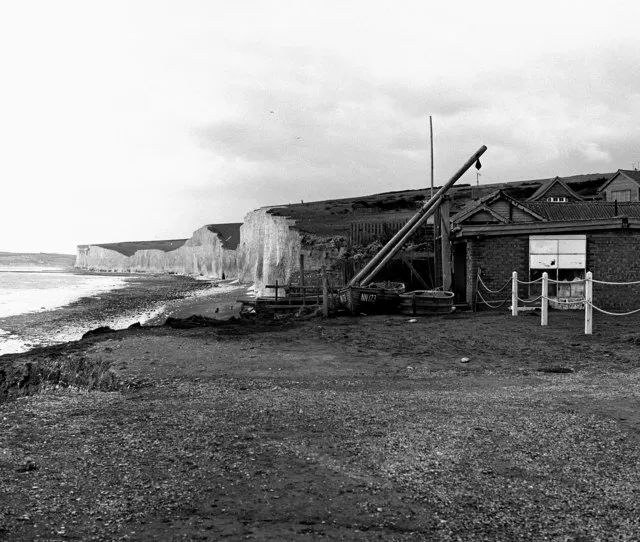
Photo: Dr Neil Clifton, CC BY-SA 2.0, via Wikimedia Commons
Every photographer in Britain has, at some point, driven ninety minutes on the strength of a Met Office icon that turned out to be a lie. You arrive at the coast, the cloud is the colour of wet cardboard, and the sunset window closes without ceremony. You go home. You look at the tide tables again on Thursday.
This is the deal we make. And winter is when the deal gets interesting.
The Icarus problem, solved
Chasing light is a fundamentally daft pursuit. You can't hold it, you can't predict it precisely, and the more you want it, the more likely it is to hide behind a bank of North Sea cloud. But the alternative — waiting for good light to arrive at your convenience — is how you end up with a hard drive full of flat midday JPEGs.
The British winter offers something the summer doesn't: the sun stays low all day. At 55 degrees north in December, it scrapes barely above the horizon, which means the light is golden from late morning until it goes, and the golden hour behaves less like a sixty-minute window and more like an entire afternoon. In northern Scotland around the solstice, you can shoot sweet light from eleven in the morning until half two. That's a working day, not a sprint.
Know your timings before you set an alarm
The single most useful habit is checking three things the night before: sunrise and sunset times, tide state, and cloud cover direction. Apps like PhotoPills and The Photographer's Ephemeris will show you exactly where the sun will sit relative to a headland, a pier or a bothy window — information that has saved more trips than any lens has.
The 2026 winter solstice lands on 21 December, which means the shortest days of the year fall comfortably on a weekend this time around. Storm season is also in full swing, and a clearing front after rain is the most reliable generator of dramatic sky in the UK calendar.
Five locations worth the drive
Godrevy and the Cornish north coast. The lighthouse, the rocks, the Atlantic doing its thing. Winter swells here give you something to point a long lens at while the light does its work behind.
Strumble Head, Pembrokeshire. A clifftop, a lighthouse, and a horizon that goes on forever. The low sun rakes across the headland in a way that makes the grass look lit from inside.
Bamburgh, Northumberland. Big beach, big castle, and light that comes in sideways off the sea. The dunes give you foreground; the castle gives you a silhouette; the wind gives you a reason to keep your bag zipped.
Holkham and the Norfolk coast. Wide skies, pine woods and an east-facing beach that rewards early risers. Winter here is quiet in a way that feels almost rude.
Mam Tor and the Great Ridge, Peak District. The classic. It's busy, it's clichéd, and it still works — especially when low cloud is spilling over the edge and the sun is burning through underneath.
Settings that actually work
Winter light is soft but it's also weak, and it changes fast. A few things to lean on:
- Base ISO, always. ISO 100 and a tripod will beat ISO 3200 and hope in almost every scenario where nothing is moving.
- f/8 to f/11 for depth, wider open if you want the foreground to fall away and the horizon to glow.
- Shoot raw and bracket. Three frames at a stop apart will rescue you when the sky is four stops brighter than the sand.
- A graduated filter still earns its place on a flat horizon like a beach, less so on a ragged treeline.
- White balance on daylight or cloudy, then adjust — auto white balance will happily neutralise the very warmth you drove three hours to find.
- Expose for the highlights. Shadow detail in raw files is forgiving. Blown sky is not.
- Try long exposures of two to eight seconds for surf and cloud movement, but keep a faster shutter in reserve for birds, dogs and the occasional wave that comes further up the beach than expected.
Weather is your collaborator, not your obstacle
The best winter frames are rarely made in clear blue. Broken cloud, post-frontal clarity, sea fret, low mist in a valley — these are the conditions that make a picture look like Britain rather than a stock library. Learn to read the sky rather than resent it. A front clearing at four o'clock is a gift; a front arriving at four o'clock is a reason to return in the morning.
Also: check the wind. A tripod on a clifftop in a 40mph gust is a £1,500 kite. Hang a bag from the hook, keep your hood up, and don't turn your back on the sea.
Kit for a cold, wet, beautiful country
Waterproof over trousers will improve your photography more than a new lens. A microfibre cloth in every pocket. Spare batteries kept warm inside your jacket, because lithium cells sulk in the cold. A flask. A head torch for the walk back to the car, which always takes longer than you think once the light has gone. And a pair of gloves you can actually operate a dial with — a small thing that makes the difference between getting the shot and swearing at a rock.
The philosophy bit
Icarus got a bad reputation for flying too close to the sun. But the myth misses the point: he flew. The wax was the problem, not the ambition. Chasing golden hour in Britain in January is an absurd, weather-dependent, largely unglamorous activity that occasionally delivers ten seconds of light so good you forget you can't feel your fingers.
That's the trade. Take the flight. Bring a coat.