The Art of the Controlled Fall: Inside Britain's Practical Stunt Scene
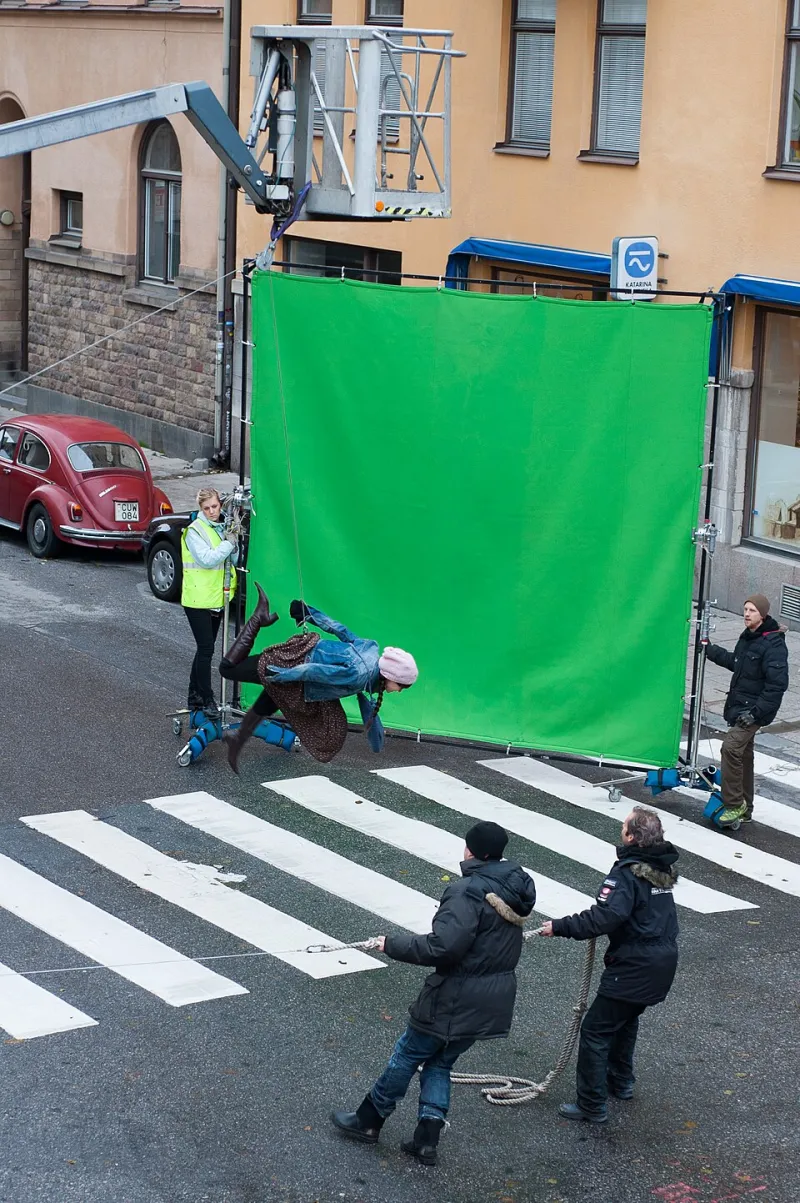
Photo: Kim Metso, CC BY-SA 3.0, via Wikimedia Commons
There's a moment, somewhere between the count and the cut, when a British stunt performer stops being a person with a mortgage and a dog and becomes a piece of physics. Everything is timed. Nothing is improvised. And yet the whole thing looks, on screen, like pure recklessness.
That contradiction sits at the heart of British action cinema. From the Pinewood sound stages that have hosted decades of Bond chaos to the wind-blasted clifftops of Pembrokeshire, the UK has built an industry around a very particular kind of risk: the sort that's rehearsed within an inch of its life, insured to the hilt, and then made to look like an accident.
A tradition built on scaffolding and nerve
The lineage is longer than most people assume. The Italian Job sent Minis into Turin sewers in 1969, but the driving was rehearsed by a small army of British stunt drivers who treated the whole thing like a maths problem. The Bond films turned Pinewood into a laboratory for car chases, ski jumps and explosions that had no business working. And generations of television — from The Sweeney to Peaky Blinders — kept a steady bench of UK performers in work between the big features.
What's changed is where it happens. Cardiff's Wolf Studios, First Stage in Leith, Space Studios in Manchester and Bristol's Bottle Yard have pulled big action productions out of the south-east and into the nations and regions. That's meant more local crews, more training pipelines and, quietly, a broader range of people getting a foot in the door.
Why British crews still like it real
Ask anyone in the trade and you get the same answer in different words: weight. A computer-generated body doesn't have mass. It doesn't hesitate for a quarter-second before the ledge. Audiences read that hesitation instinctively, even if they can't name it.
“You can fake the fall, but you can't fake the recovery,” one coordinator told us, describing the tiny corrections a performer makes mid-air to protect a knee, a camera or a co-star. Those adjustments are the difference between a shot that feels dangerous and one that feels drawn.
There's also a practical argument. A well-planned practical gag often costs less than a mid-tier visual effect, and it gives the edit real footage to work with. Practical stunts don't get stuck in a render farm at 2am the week before delivery.
Anatomy of a hit: how a stunt actually lands
Strip away the glamour and a stunt is a project management exercise. The rough shape looks like this:
- The read. The coordinator breaks the script down and flags what can be done practically, what needs a rig, and what needs a conversation with the director about why it can't be done at all.
- The design. Wire work, airbags, ratchets, decelerators, breakaway props, hidden pads. The plan isn't to survive a fall — it's to never truly take one.
- The rehearsal. Weeks, sometimes months, in a warehouse in Slough or a car park in Glasgow. Repetition until the movement is boring.
- The safety meeting. Risk assessments, method statements, medical cover, fire cover, the lot. British sets run on paperwork, and that paperwork is why the country's safety record holds up.
- The shoot day. Usually the shortest part. Often the most tedious part, too — the same six-second beat, twelve times, from four angles.
The glamour is entirely front-loaded into the two seconds before someone shouts action.
The register, the grades and the people who say no
Britain's stunt industry is unusual for how formalised it is. The British Stunt Register exists to verify that a performer can actually do the disciplines they claim — riding, driving, swimming, fighting, falling, high work. The Joint Industry Stunt Committee grades performers from trainee upwards, which means a producer can't simply hand a harness to a keen extra.
That structure is why the UK has been able to keep practical action alive while other territories lean harder on digital doubles. It's also why coordinators will happily kill a shot. “We are the only department whose job is to make the film worse, occasionally, so that nobody goes to hospital,” one told us. “You learn to enjoy being the least popular person on set.”
Lessons for filmmakers who want to push without crashing
If you're shooting something ambitious on a shoestring, the professionals' habits transfer remarkably well.
Rehearse the boring bits. Most on-set injuries come from simple movements done once, badly, in bad footwear. Walk the action until it's dull.
Design consequences, not impacts. You don't need to show a body hitting the ground. You need a reaction, a sound, a dust cloud, a cut. Implication is free; spectacle is not.
Buy your safety before your lens. A medic and a trained performer matter more than a second camera body. Budgets always get squeezed in the wrong order.
Know the rules where you're filming. Councils, landowners, the National Trust, Network Rail and Transport for London all have opinions about what you can do on their patch. A drone over a heritage coastline is not the same as a drone in a back garden.
Get insurance or get honest. If you can't insure it, don't promise it — and definitely don't ask a friend to do it for free.
The next generation
What's quietly encouraging in 2026 is how many routes into the craft now exist outside London: parkour gyms in Leeds, stage combat schools in Birmingham, rigging courses in Cardiff, and a steady stream of regional productions that need local doubles. The industry still runs on who you know, but the map of where you can meet them has widened considerably.
The Icarus joke writes itself — fly close to the sun, then discover the sun is a Health and Safety Executive risk assessment in a high-vis jacket. But the truth is more interesting. The best British stunt work isn't about tempting fate. It's about calculating it precisely enough that the audience gets to feel the heat without anyone actually burning.