The Quiet Drama of Council Tile: Scouting Britain’s Civic Buildings for the Camera
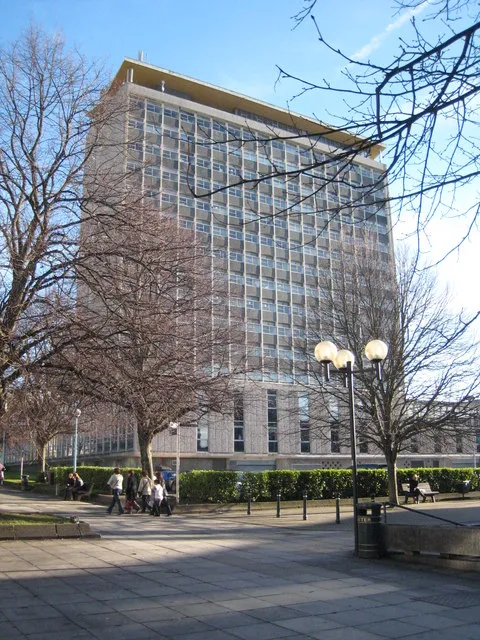
Photo: Rod Allday, CC BY-SA 2.0, via Wikimedia Commons
There is a particular kind of British light that falls through the windows of a 1970s leisure centre at 9.15 on a Tuesday morning. It is not romantic. It is not golden hour. It is fluorescent, slightly green, and absolutely full of story. That is the strange promise of civic architecture: buildings designed for rates notices, swimming lessons and council meetings can become unexpectedly cinematic when you point a camera at them properly.
At Icarus Studios we have spent a lot of time looking at places that were never meant to be looked at. Not stately homes, not glass towers, not another warehouse with exposed brick. We mean the library with the suspended ceiling, the council office with the stubbornly optimistic mural, the post-war precinct where the paving slabs have been repaired so many times they look like a map of local government. These places are overlooked because they are ordinary. That is exactly why they work.
Why ordinary civic buildings read as cinema
Civic architecture carries a certain civic optimism. Even when the funding has gone, the signage has faded and the seating has been replaced three times, you can still feel the original belief behind the building: that public life should have a decent roof over its head. That tension between intention and wear is gold for filmmakers and photographers. It gives you texture, context and a sense of place without having to build a set.
A library corridor can read as institutional, intimate or eerie depending on the lens and the time of day. A leisure centre pool hall, empty before opening, has the hush of a theatre. A council office reception can be deadpan comedy, bureaucratic dread or a surprisingly warm portrait backdrop. The buildings are not blank. They are specific. And specificity is what makes an image stick.
Research begins on the map, not on the moodboard
Visual research is where the adventure starts. We begin with maps, planning portals and local archives rather than moodboards. Council planning applications often include elevation drawings and old photographs. Historic England listings can point you towards post-war buildings with protected details. Local library photo collections are a goldmine for streetscapes that have changed beyond recognition. Even a slow walk down a high street with Google Street View open on your phone can turn up a precinct you would otherwise miss.
Build a shortlist, then visit in person. Photograph the approach, the entrances, the sightlines and the bits that will ruin a shot if you ignore them: bins, parking meters, modern signage, security lights. Note the light at different times of day. Note the noise. Note where the public actually walks. A building that looks perfect on a screen can be a nightmare once you are standing in it with a tripod.
The art of asking: councils, property managers and the long email
Approaching a council is not like emailing a venue. You need to work out who owns or manages the building. It might be the local authority, a leisure trust, a library service, a property company or a combination of all three. Some councils have film offices or locations teams. Others do not, which means you may be passed between asset management, facilities and communications before anyone says yes.
Be specific and early. Explain the project, the dates, the crew size, the footprint, the equipment, the budget and what you are asking for. Do not say you want to shoot in a library and leave it there. Say you want two hours in the reference section before opening, a small crew of six, no access to public computers, and a copy of the final film for the library service. Offer a fee if you can. Offer a credit. Offer a community screening. Property managers care about disruption, health and safety and reputation. Make their job easier and the conversation gets warmer.
Permissions, insurance and the unglamorous paperwork
The paperwork is not the enemy. It is the thing that lets you relax on the day. Expect a location agreement, a risk assessment, a method statement and evidence of public liability insurance. Many councils ask for £5m cover; some ask for £10m. Check their film policy before you assume anything. If you are filming in a public space, remember that public access does not equal automatic permission to set up a crew, block a corridor or use a tripod for hours.
If you need parking suspensions, road closures or access to restricted areas, start those conversations weeks in advance. If identifiable members of the public will appear, have a plan for notices and release forms. If children or vulnerable adults are involved, follow safeguarding procedures and expect those checks to take time. And do not forget equipment insurance. A dropped light in a council atrium is not a creative accident; it is a claim.
Case study: a leisure centre with a story
We recently worked on a six-minute short, The Last Swim, which needed a pool hall that felt lived-in rather than styled. The script called for a 1970s leisure centre in the West Midlands, but we did not want to dress a studio. We wanted the real thing: the lane ropes, the tiles, the faded lane markings, the clock that no one has corrected since 2019.
We found the building through a council film office contact who knew the leisure trust managing it. The first email was long and boring in the best way: dates, crew of eleven, one closed pool session, a lifeguard on duty, public liability certificate, risk assessment, method statement and a commitment to keep all public routes clear. We offered a small location fee and a free screening for staff and regular swimmers.
The shoot was two days. On the first morning we had the pool hall before opening. We did not redecorate it. We removed a few modern signs, moved a bin, and let the existing fluorescent tubes do the work. The art department spent more time on wet floors than on set dressing. The lesson was simple: public buildings have routines. If you schedule around them rather than against them, everyone relaxes, and the footage is better for it.
The ethics of borrowing community space
Filming in a library or leisure centre is not a neutral act. People use these places. They read, swim, queue, wait, complain, study and meet. Treat the building as a guest, not as a prop. Give notice. Keep your crew small. Do not block the entrance. Do not photograph people who have not agreed to be photographed. Leave the place as you found it. Share the final work with the community if they want it. Pay for the disruption where you can.
The best civic locations are not empty shells. They are working buildings with a social life. The camera should be curious about that life, not contemptuous of it.
A scouting checklist for 2026
- Confirm ownership and management before you fall in love with a facade.
- Read the council film policy and any building-specific rules.
- Visit at the same time of day as the shoot.
- Photograph entrances, exits, sightlines, power access and noise sources.
- Map public routes and identify what you cannot block.
- Check insurance requirements early, including public liability and equipment cover.
- Draft a risk assessment that reflects the real building, not a generic template.
- Ask about parking, loading, toilets, green room space and accessibility.
- Build in time for notices, release forms and safeguarding checks.
- Offer a fee, a credit, a screening or all three.
- Leave no trace, and send the finished work back to the people who lent you the space.
Britain is full of buildings that were built for another story. That is exactly why they are worth scouting. The quiet drama is already there. You just have to ask nicely, do the paperwork, and know when to get out of the way.