The Maybe Files: Britain's Location Scouts and the Streets That Wait
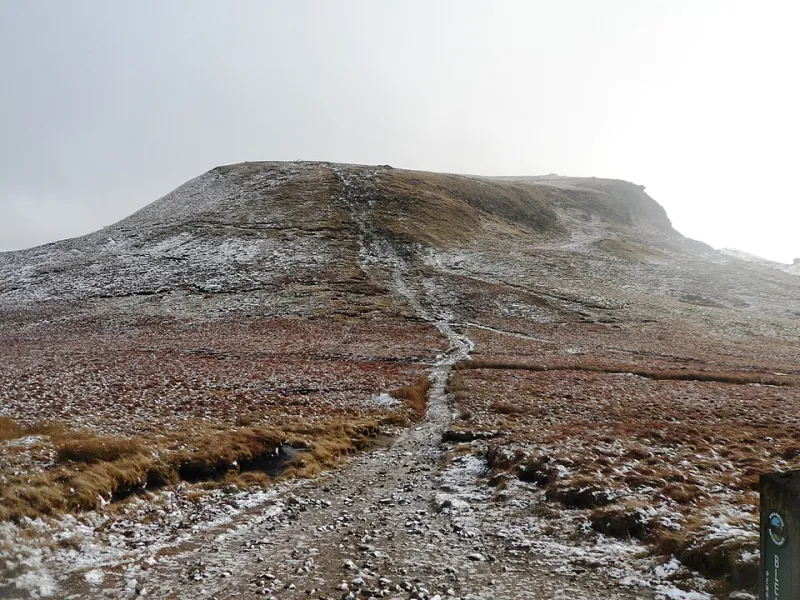
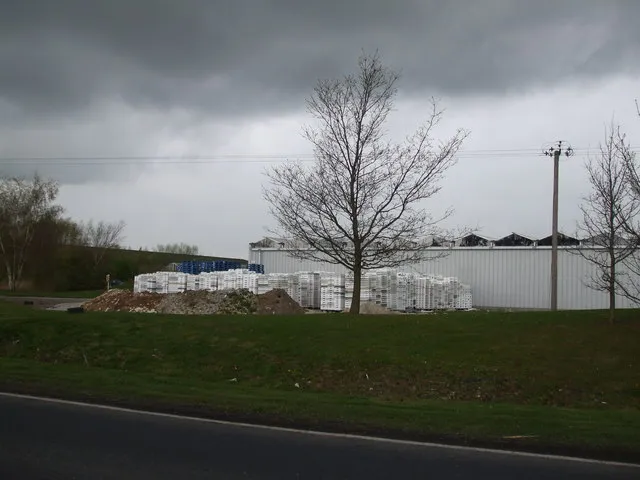
Photo: Anthony Parkes , CC BY-SA 2.0, via Wikimedia Commons
Before a film crew arrives, the street has already been walked. Not by a director, not by an actor, but by someone with a camera, a notebook and a persistent interest in the way a place behaves at 7.40am on a Tuesday. Britain's location scouts are the people who turn a hunch about a corner shop, a coastal path or a tired industrial estate into a shortlist that a production can actually use. Their work is part detective story, part architectural survey and part exercise in learning to love a place for what it almost is.
The First Pass Is Always About Light
A scout does not simply look at a building. They look at what the building does with the sky. In a British winter, that means factoring in low sun, fast clouds and the distinct possibility that the light will be gone by the time the unit base is parked. A south-facing terrace might glow for twenty minutes and then turn into a grey wall. A north-facing alley might hold a soft, even light all morning, which is less romantic but far more useful when you need to shoot the same scene across three days.
So the recce photographs pile up. Morning shots, afternoon shots, shots with a phone held up to show the sun path. Some scouts use apps; most still trust their own eyes and a repeated walk. The best images in a location file are rarely the prettiest. They are the ones that answer a practical question: can we put a camera here without the world getting in the way?
Permission Is a Creative Material
A location is not just a view. It is a set of agreements. A private house has a homeowner. A council estate has a housing officer. A high street has a highways team, a parking bay and a shopkeeper who does not want a generator outside the door. Scouts spend as much time on the phone as they do behind a camera, building a picture of who says yes and what that yes costs.
That is why the shortlist often feels like a mood board with parking notes. Alongside the picture of a pebbledash semi or a Victorian station canopy, there are details about access, noise, neighbours, public liability and whether the pavement is wide enough for a pram push. A place can be perfect on screen and impossible on paper. The scout's job is to find the overlap.
Texture Is the Story
British streets have a particular kind of wear. Kerbs are chipped. Brickwork is soot-stained. Shop signs have faded in a way that no art department can quite fake without looking like a theme park. Scouts are drawn to that honesty. A pebbledash wall with a repaired crack tells you more about a character's life than a pristine Georgian terrace ever could.
This is not nostalgia for grit. It is an eye for evidence. A scout will notice the way a seaside town smells of chips and salt, or how a West Yorkshire mill road holds a puddle long after the rain. They will photograph a bus shelter because the glass has a scratch across it that looks like a map. These are the small, unglamorous details that make a fictional street feel as if it has already lived a life.
The Shortlist Is a Collection of Maybes
The files themselves are not usually dramatic. They are PDFs, shared folders, pinned maps and spreadsheets with tabs for region, type and availability. Some scouts keep personal archives going back years: a Norfolk coastal lane, a Glasgow back court, a Cardiff arcade, a Belfast terrace with a particular shade of pebbledash. A production might ask for a London street that can pass for 1970s Manchester. The scout opens the maybe files and starts narrowing.
What gets cut is often as interesting as what stays. A location might be visually perfect but fall apart on sound. Another might have the right bones but the wrong owner. A third might be too famous, too busy, too near a school at pick-up time. The shortlist is a negotiation between story and logistics, and the scout is the person holding both ends.
The Places That Almost Were
Every scout has a list of near-misses: the closed cinema that would have been perfect if the roof had not gone, the council estate that said no, the beach that was just too far from a unit base. These places do not disappear. They stay in the file, waiting for a different script or a different budget. Sometimes a location is scouted for one film and used for another five years later. The street that almost existed on screen finally gets its moment.
That is the strange pleasure of the job. A scout is not building a set. They are reading a place for what it might become, then writing it down carefully enough that someone else can see it too. The best location is often the one that feels like it has been waiting, not for a crew, but for a story that fits.
For Icarus Studios, that is the sort of adventure worth following: not the finished frame, but the moment before it, when a street is still only a possibility and the light is doing something interesting on the pavement.